 Sự Kiện Vui
 Dạy Vui

 Sign in
AssessmentAvailable now
Two truths, one lie
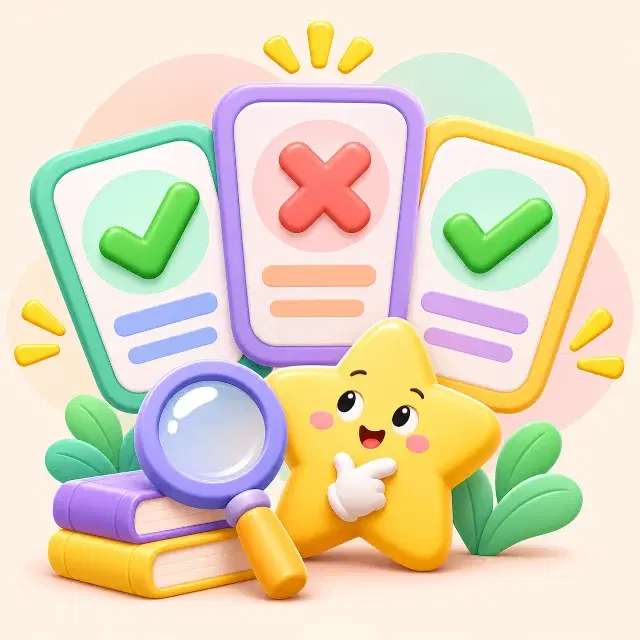
Two true statements, one false — students have to think to find the truth.
📚 Science, History, Geography⏱ 5 min👥 Devices · Paper cards
TRY IT NOW
Sample set: Natural Science · Grade 6
A student's phone; the classmates are simulated.
Loading the questions…
Class 8A3 is playing with you · 0/31 classmates answered
WHAT DO STUDENTS LEARN?
1Practise critical thinking and fact checking.
2Recognise common misconceptions.
3Learn to explain and defend a choice with knowledge.
HOW TO RUN IT IN CLASS
1The teacher picks a topic and a set of three statements.
2The screen shows three statements about the same content.
3Students choose the false statement and say why.
4The teacher reveals the answer and explains each statement.
Supported modes:Whole classPaper cardsHomework · Pro
Variations
- Individual challenge: each student finds the false statement alone.
- Group debate: groups agree on an answer and explain it.
Tips for teachers
- The two true statements must be accurate and verifiable.
- Avoid false statements that are vague or a matter of opinion.
The teacher gets: The most mistaken statement. Only the teacher sees each student's results.

RELATED ACTIVITIES
 Quick check quizLesson start, lesson end, revision
 Fill in the blankVocabulary, grammar
 Put in orderHistory, processes
Use Two truths, one lie with your class
Build it from your lesson in 2 minutes; the whole class joins with one code.